

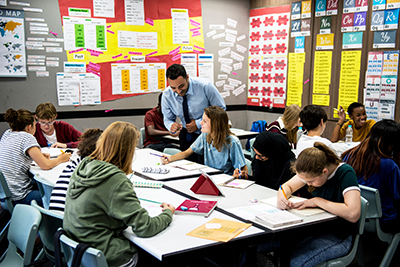
A teacher leaning down to assist students working at a shared table in a colorful classroom.

Education Studies

Explore how people learn and how to teach in settings beyond traditional classrooms.

EDucation

Education Studies Minor at William Jewell

Educational Studies is designed for students interested in teaching and learning outside of traditional K–12 classrooms. Students explore how people learn, develop instructional strategies, and gain experience applying education in settings such as museums, businesses, nonprofits, and community organizations.

Billy J. Bird, the William Jewell College mascot, posing with wings spread open, framed in a circular cutout with campus trees and a red phone booth in the background.

Interests & Attributes:

  • Engaging Communicators
  • Reflective & Adaptive
  • Community-Minded Thinkers

Goals for Student Learning

Students develop an understanding of how people learn across different stages of life and in a variety of environments. They explore developmental differences, diverse learning needs, and the social contexts that shape educational experiences.

Students learn practical strategies for teaching and communicating information effectively. Coursework in culturally responsive teaching, high-leverage teaching strategies, instructional design, and informal education helps students adapt their approach to different audiences and settings.

Students also examine education beyond the traditional classroom. Through informal education and field experiences, students explore how museums, businesses, nonprofits, community organizations, and other settings can create meaningful learning opportunities.

The minor encourages students to think critically about education in a broader societal context. Students can explore issues related to schools, communities, educational policy, and the ways education is developed and delivered across society.

More About The Minor

The Educational Studies minor combines coursework in education, psychology, instructional strategies, informal education, and educational research. Students build a foundation for understanding how people learn while developing practical skills they can apply in non-school environments.

Students can also choose additional coursework that connects education to areas such as school and society, developmental psychology, geography, philanthropy, nonprofits, instructional design, or disciplinary literacy. This flexibility allows students to shape the minor around their academic and career interests.

Beyond Jewell

Educational skills are valuable in many settings beyond traditional schools. Graduates can apply their understanding of learning and instruction in businesses, nonprofits, museums, community organizations, healthcare settings, and other environments where people need to learn new information or skills.

The minor can complement majors in fields such as business, communication, psychology, nonprofit leadership, marketing, and other disciplines where teaching, training, mentoring, or community engagement are important.

Education Faculty

Find Your Place at William Jewell